BookEunoia
Book Translation Services
Your Story, Told Beautifully
in Every Language,
Not Just Translated.
There is a profound difference between a book that has been translated and one that reads as if it were written in the target language. The first converts words. The second carries voice, rhythm, humor, and cultural resonance into a new language so readers in Madrid, Paris, Berlin, or Tokyo experience your story the way your original readers did. That is literary translation, and it is what we do.
40+
LanguagesAvailable
TEP
ProcessStandard
100%
LiteraryQuality
No royalty splits, ever
No hidden fees
Global Distribution
Free consultation, no commitment
What translation actually preservesLiterary Translation
🇬🇧
English Original
"She had butterflies in her stomach as she waited to go on stage."
↓
🇩🇪
German: Literary Translation
"Sie war aufgeregt und nervös, als sie darauf wartete, die Bühne zu betreten."
The idiom "butterflies in her stomach" does not exist in German; a literary translator finds the culturally resonant equivalent. A machine translator renders it literally, confusing the reader.
👤Native-Speaking Literary Translators
📋TEP Process: Translation + Editing + Proofreading
🎭Genre-Specialist Matching
🌍40+ Language Pairs
©100% Copyright Yours
👤Native-Speaking Literary Translators
📋TEP Process: Translation + Editing + Proofreading
🎭Genre-Specialist Matching
🌍40+ Language Pairs
©100% Copyright Yours
The question every author asks in 2025
Why Not Just Use ChatGPT
or DeepL to Translate Your Book?
It is the obvious question, and it deserves a direct answer. Machine translation has improved dramatically, but literary translation requires something AI still cannot reliably do.
⚠ Machine / AI Translation
What automated tools do and what they miss
Modern AI translation (ChatGPT, DeepL, Google Translate) converts words with increasingly high accuracy at the sentence level. For technical documents, instructions, or business content, this is often acceptable. In literary work, it consistently fails at what makes a book a book.
- Translates idioms literally, producing confusion or unintentional comedy
- Cannot capture authorial voice; all AI translations default to a generic "translation voice"
- Misses cultural context, references that mean nothing to the target reader
- Fails at humor, wordplay, and double meanings, the hardest literary elements to translate
- Cannot make editorial decisions; when ambiguity exists, a machine guesses; a translator chooses
- Produces technically correct but rhythmically dead prose; readers feel something is wrong, even if they can't name it
The idiom problem, a real example
Machine: "She was nervous before going on stage" + "She had butterflies in her stomach" → "Tenía mariposas en su estómago" (Spanish literally: she had butterflies in her stomach, meaningless to a Spanish reader)
Literary translator: "Tenía el estómago revuelto" (Spanish idiomatically correct equivalent: she had a churning stomach.)
✓ Human Literary Translation
What a native-speaking literary translator brings
A literary translator is a writer in two languages. They don't convert your words; they recreate your effect. They ask: What did this sentence make an English reader feel? Then they find the words, structure, and rhythm in the target language that produce the same feeling for that language's readers.
- Preserves authorial voice, the translated book sounds like you, not like a translation
- Adapts idioms, humor, and cultural references to their target-language equivalents
- Makes editorial choices when ambiguity exists, choosing the meaning that serves the narrative
- Maintains sentence rhythm and pacing, the cadence that makes your prose readable
- Handles culturally specific content: names, dates, measurements, social contexts
- Can be briefed on your intent; a machine cannot be told "this character speaks formally to signal status"
What readers actually experience
"I couldn't tell this book had been translated at all. It read like it was written in French.", Reader review of a well-translated fiction title.
💡
The honest answer about AI-assisted translation
A hybrid approach, using AI for a first-pass rough draft that a human editor then substantially rewrites, can reduce costs on certain projects while maintaining quality. We offer this as an option for non-fiction titles where voice is less central, with full transparency about what was machine-generated versus human-written. For fiction, memoir, and any work where voice is the product, we recommend full human translation. We'll honestly advise on which approach best fits your specific book.
The professional standard
TEP: The Three-Stage Process
Every Publication-Ready Translation Requires
TEP stands for Translation, Editing, Proofreading, the professional standard for any translated book intended for publication. Commissioning translation-only, skipping editing, and proofreading are the most common and expensive mistakes authors make.
T
Translation
Primary Translation
A native-speaking literary translator with genre-specific experience converts your complete manuscript into the target language, not word by word, but meaning by meaning, preserving voice, rhythm, and cultural resonance throughout. This is the project's creative core.
Primary translator, native speaker, genre specialist
E
Editing
Bilingual Editorial Review
A second, senior linguist reads the translated manuscript against the original, checking accuracy, flow, consistency, and tone. They identify passages where the translation is technically correct but loses something in feel, where idioms haven't been fully adapted, or where the voice drifts from the source. This is the quality control stage that separates professional translation from adequate translation.
Senior bilingual editor, checks translation against source
P
Proofreading
Final Language Proofread
A final proofread of the target-language text, checking spelling, grammar, punctuation, and consistency in the target language independently of the source. This pass catches errors introduced during the editing process and ensures the manuscript is publication-ready in its new language.
Target-language proofreader, final polish before delivery
⚠️
Why translation-only is never enough for publication
A translation without bilingual editing is reviewed by only one person who knows both languages, the translator themselves. Every professional translating their own work has the same blindspot problem as an author proofreading their own manuscript. The editing stage is not a luxury; it is the check that ensures your readers get the quality they deserve in their language.
Beyond translation
Localization: When Your Book Must
Feel Native to Its New Readers
Cultural Reference
English: "She swung for the fences on her first novel."
→ Baseball idiom, no cultural parallel in Germany
German: "Mit ihrem ersten Roman hatte sie alles auf eine Karte gesetzt." (She had staked everything on her first novel.)
Meaning and intent preserved; culturally meaningless idiom replaced
Humor & Wordplay
English pun: "Time flies like an arrow; fruit flies like a banana." (Groucho Marx)
→ Double meaning cannot be replicated word-for-word
The translator finds a French double meaning that creates the same comic effect, not the same words, the same joke.
Comedy preserved through linguistic creativity, not literal translation
Measurement & Date Formats
US: "She stood five feet eight, weighed 140 pounds, in March of '98."
→ Metric conversion + date format localization
French: "Elle mesurait 1,73 m, pesait 63 kg, en mars 98.", units and format converted for French readers
Technical localization: numbers, formats, and units
Character Names & Titles
English: Character named "Bobby" in a children's book
→ Name sounds unnatural/foreign to the target audience
French edition: "Théo", a name that feels natural and familiar to French child readers while retaining character energy
Discussed with the author before any change is made
Translation converts words. Localization converts the reading experience.
Localization is the set of decisions that go beyond word-for-word accuracy to ask: how does this feel to a reader who grew up in this culture? Idioms that are meaningful in English may be meaningless or confusing in German. Humor built on wordplay may need complete creative reconstruction in French. Character names that feel natural in English may feel foreign in Japanese.
Not every book needs the same degree of localization. A business non-fiction book requires less than a comedy novel. An academic text requires almost none. We discuss the appropriate localization approach for your specific book in the project brief.
Translation
Converting the text from one language to another with accuracy and preservation of meaning, voice, and narrative intent
Localization
Adapting cultural references, idioms, humor, measurements, date formats, and any other elements that require cultural context to land correctly in the target market
Choosing your first translation market
Which Language Should
You Translate First?
Translation is an investment. The right first market maximizes your return. Here are the most valuable translation markets for self-published English-language authors, with honest guidance on which genres perform best in each market.
🇪🇸
Spanish
US Hispanic + Latin America + Spain
580M+
native speakers worldwide
The most widely read translation for most English-language authors. The US Hispanic market alone is one of the fastest-growing reading markets. Latin American markets (Mexico, Colombia, Argentina, Brazil-Portuguese separately) represent enormous untapped audiences for fiction and self-help. Amazon's Spanish-language Kindle store is well-established.
Highest priority for most genres🇩🇪
German
Germany + Austria + Switzerland
€9.3B
The German book market annually
Europe's largest book market, with extremely high English-language book imports. German readers have a strong appetite for translated English fiction, particularly thrillers, crime, and literary fiction. Business books also perform very well. Amazon.de is a major sales channel and well-developed for indie publishing.
Strong for fiction, business, and literary🇫🇷
French
France + Belgium + Quebec + Francophone Africa
300M+
French speakers globally
France has one of the strongest literary cultures in the world, with a large and enthusiastic market for translated fiction. Quebec (Canada) adds a significant market in North American French. Romance, literary fiction, and self-help all translate well. Amazon.fr is established, but local French platforms (Fnac, Cultura) are also important.
Strong for literary fiction, romance, and self-help🇧🇷
Portuguese (Brazilian)
Brazil primarily (distinct from European Portuguese)
$2B+
Brazilian book market
Brazil is the largest book market in Latin America and one of the fastest-growing digital reading markets globally. Brazilian Portuguese is distinct from European Portuguese; a translation for Brazil requires a Brazilian translator, not a Portuguese one. Fiction, self-help, and business books all perform strongly. Note: requires a separate ISBN from any European Portuguese edition.
Fastest growing, digital-first market🇮🇹
Italian
Italy + Italian-speaking Switzerland
€3.7B
The Italian book market annually
A passionate literary culture with a strong appetite for translated fiction, particularly literary and commercial novels. Italy has a rich tradition of book publishing and reading. The eBook market is growing, but physical books still dominate, meaning the distribution setup (IngramSpark Italy) is important alongside the translation itself.
Strong for fiction, particularly literary🇸🇦
Arabic
Middle East + North Africa (MENA)
400M+
Arabic speakers globally
A significantly underserved market for translated English-language books, with strong demand for self-help, business, and non-fiction. Literary fiction is also gaining traction. The digital market is growing rapidly. Note: Modern Standard Arabic is understood across the region; dialect translation is used only for specific markets.
High opportunity, underserved by self-publishers💰
The ROI question: when does translation make financial sense?
At $0.06–$0.12 per word (TEP), a 70,000-word book costs $4,200–$8,400 to translate into Spanish or French. This investment makes sense when you have a sales track record in English that suggests strong performance in the target market's genre, or when your genre has demonstrated cross-market appeal. A thriller that sells consistently in the UK is a strong translation candidate for German. A memoir with strong US performance may translate well for Brazil. We advise on the ROI case for your specific book before any project begins.
Languages we work in
40+ Language Pairs,
Native Speakers for Everyone.
Every translation is handled by a translator who is a native speaker of the target language, not a bilingual speaker of the source language. The distinction matters for natural-sounding literary translation.
🇪🇸
Spanish
Español
🇫🇷
French
Français
🇩🇪
German
Deutsch
🇧🇷
Portuguese (BR)
Português
🇮🇹
Italian
Italiano
🇸🇦
Arabic
العربية
🇨🇳
Chinese (Simplified)
中文(简体)
🇯🇵
Japanese
日本語
🇰🇷
Korean
한국어
🇳🇱
Dutch
Nederlands
🇷🇺
Russian
Русский
🇵🇱
Polish
Polski
Plus Swedish, Norwegian, Danish, Finnish, Turkish, Hindi, Hebrew, Romanian, Czech, Hungarian, Ukrainian, and 20+ additional languages available on request. If your target market isn't listed, we almost certainly cover it.
Translation by genre
Every Genre Has Its Own
Translation Challenges
We match every manuscript with a translator who has specific experience in its genre, because the skills required to translate a thriller are genuinely different from those required to translate a children's picture book or a business title.
🔪
Fiction (Thriller, Crime, Literary)
Voice and atmosphere are the product. A thriller translator must maintain tension across every chapter, preserve the rhythm of short-sentence action sequences, and adapt cultural references that set the scene for the original readers. Literary fiction requires the highest level of prose craft in the target language.
Key challenge: Voice, pacing, and atmosphere transplanted intact
💭
Memoir & Personal Narrative
Memoir translators must preserve the author's speaking voice in a way that feels personal and authentic to readers who never met them. Dialect, idiolect, and the specific texture of an individual's language must be recreated in the target language, not sanitized into a generic voice.
Key challenge: Preserving the author's unique speaking voice
🏢
Business & Self-Help
Business books require both linguistic accuracy and credibility; the translated version must carry the same authority as the original. Frameworks, acronyms, and business-specific terminology must be adapted to their target-language equivalents, not translated literally.
Key challenge: Authority, credibility, and terminology consistency
🐻
Children's Books
The most age-sensitive genre to translate. Rhyme schemes, reading-level vocabulary, and the cadence of read-aloud text must all be preserved in the target language, which requires a translator who writes for children in that language, not merely one who translates adult text. Character names and cultural references often require localization decisions.
Key challenge: Rhyme, rhythm, reading level, and cultural naturalness
💕
Romance & Commercial Fiction
Romance translation requires cultural fluency in both the source and target conventions of the genre. What reads as romantic in English may read as formal or cold in French. Flirtatious dialogue, emotional language, and the specific vocabulary of intimacy all require careful target-language calibration.
Key challenge: Emotional resonance and genre-specific register
🔬
Expert Non-Fiction & Academic
Technical accuracy combined with readability for a non-specialist audience. Subject-specialist translators with both linguistic and domain expertise, a medical non-fiction translator needs medical knowledge in both languages. Footnotes, citations, and reference formats may also require localization to align with the target country's academic conventions.
Key challenge: Technical accuracy + accessible prose in the target language
The project journey
From Manuscript to
Publication-Ready Translation
A clear, five-stage process, you review a sample translation before committing to the full project, and nothing advances without your approval at each stage.
1
Project Brief
Genre, target language, market, tone guidance, and any specific localization requirements are confirmed before translator matching.
Day 1
2
Translator Matching
Native-speaking, genre-specialist translator assigned. You receive their profile and a sample translation of your first 500 words, approved before the full project begins.
Days 2–5
3
Translation (T)
The primary translator works through the complete manuscript. Progress delivered in chapter batches for your review throughout, not as a complete surprise at the end.
2–8 weeks
4
Editing + Proofreading (EP)
Bilingual editor reviews the complete translation against the source. Target-language proofreader completes the final pass. Author review and revisions included.
1–2 weeks
5
Delivery
Publication-ready manuscript in your preferred format (Word, PDF, InDesign), ready for formatting and distribution in the target market.
Final delivery
📋
Each translated edition needs its own ISBN and its own KDP listing
A translated edition is a new book in publishing terms. It requires a separate ISBN per format (print, eBook, audiobook) in the target language. When listing on Amazon KDP, the translated edition is uploaded as a separate title with its title, description, and keywords written in the target language, and the Primary Marketplace set to the country that matches the language. We advise on all of this as part of the project handover.
Transparent pricing
What Translation Costs
Honestly Explained.
TEP Rate Guide, per word (English source)
Based on a 70,000-word standard novel
Language PairRate per word70k word estimate
🇪🇸 English → Spanish
$0.06–$0.09
$4,200–$6,300
🇩🇪 English → German
$0.07–$0.10
$4,900–$7,000
🇫🇷 English → French
$0.09–$0.12
$6,300–$8,400
🇮🇹 English → Italian
$0.06–$0.09
$4,200–$6,300
🇸🇦 English → Arabic
$0.08–$0.12
$5,600–$8,400
🇨🇳 English → Chinese
$0.07–$0.11
$4,900–$7,700
🇯🇵 English → Japanese
$0.08–$0.13
$5,600–$9,100
The numbers behind the investment decision
Translation is priced per word and includes the full TEP process: Translation, Editing, and Proofreading. The rate range reflects translator experience level, genre complexity, and timeline. Literary fiction commands slightly higher rates than non-fiction because of the additional craft involved.
The key question before commissioning a translation is whether you can realistically expect to recoup the investment in book sales in the target market. We discuss this honestly during the free consultation.
Simple ROI model, English to Spanish, 70,000 words
TEP translation cost~$5,250
Cover design (Spanish edition)~$600
Formatting (Spanish edition)~$350
Total investment~$6,200
eBook royalty on $4.99 (70%)$3.49 / sale
Break-even at~1,780 copies
Author results
When the Translation
Opened a New World
★★★★★
"My thriller had done well in the UK and the US. My Spanish translator described it as 'a book that thinks like a Spanish thriller should think' after reading it, which told me she got it completely. The Spanish edition launched six months after the English original and, within three months, had outsold the English UK edition. The investment paid for itself twice over in the first year."
MF
Marcus F.
Thriller author, Edinburgh, Scotland
English → Spanish★★★★★
"I'd tried DeepL on a chapter to see if it was good enough. It was technically accurate, but it felt sterile, like every sentence had been laundered of personality. The professional French translation retained all the dry humor of the original. A French reader emailed to say they'd recommend it to three friends, which is what reviews in France look like."
CW
Claire W.
Literary fiction author, London, UK
English → French★★★★★
"My children's picture book rhymes in English. I was convinced it couldn't be translated because of that. The German translator came back with a version that rhymed differently but kept the same playful rhythm as my English text. My German-speaking daughter tested it with actual children, and they loved it. I genuinely hadn't believed that was possible."
AK
Anna K.
Children's author, Vienna, Austria
English → GermanYour questions
Translation Questions.
Direct Answers.
The questions every author asks before commissioning a translation.
Can I just use ChatGPT or DeepL and have a human editor review it?
For non-fiction where voice is secondary to information, a hybrid AI-plus-human-editing approach can work at reduced cost. For fiction, memoir, children's books, or any work where voice is the product, we do not recommend this approach; the gap between AI translation and literary translation is large enough that the editing required amounts to a rewrite. We offer the hybrid option for appropriate projects with full transparency about its limitations.
What does TEP mean, and why do I need all three stages?
TEP stands for Translation, Editing, Proofreading. Translation alone is reviewed by one person, the translator, who shares the same blindspot problem as any writer reviewing their own work. The editing stage is a second bilingual professional checking the translation against the source for accuracy and flow. The proofreading stage is a final check of the target-language text. All three stages are required for a publication-ready translated manuscript.
How long does translating a full book take?
For a standard novel (60,000–80,000 words): approximately 6–10 weeks from project start to final delivery, 4–6 weeks for the primary translation, 1–2 weeks for bilingual editing, and 1 week for the final proofread and author review. Shorter non-fiction books can be completed in 4–6 weeks. We provide a specific timeline at the start of every project.
Do I need a separate ISBN for each translated edition?
Yes, each format of each language edition requires its own ISBN. A 70,000-word novel translated into Spanish and published as a paperback and an eBook requires two new ISBNs (Spanish print and Spanish eBook). Each translated edition is also listed as a completely separate title on KDP and other distribution platforms, with its own title, description, and keywords written in the target language.
Which language should I translate into first?
For most English-language self-published authors, Spanish is the most widely reaching first translation, covering the US Hispanic market, Latin America, and Spain. Germany is the largest European market for book sales volume. The right choice depends on your genre and where your book's themes resonate most culturally. We honestly advise on this during the free consultation, based on your specific book.
Who owns the copyright in the translated version?
You own 100% of the copyright in the translated edition. The translator holds no rights in the finished manuscript; copyright transfers to you upon project completion as documented in the project agreement. You are free to publish the translated edition on any platform, in any territory, under any arrangement you choose.


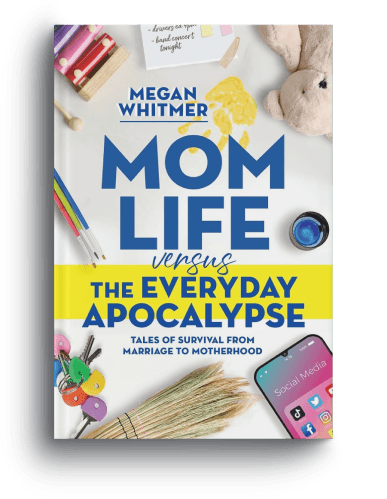
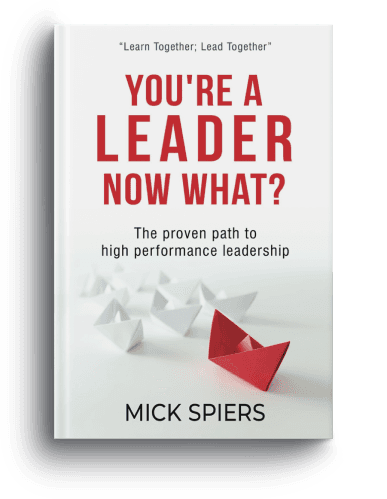
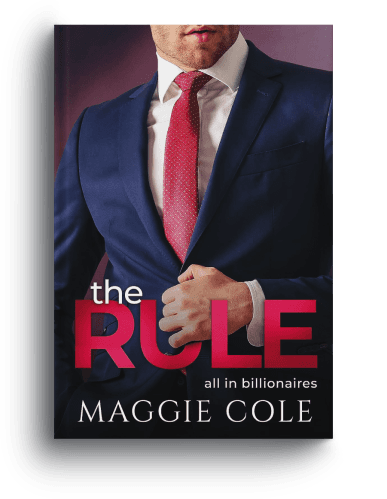
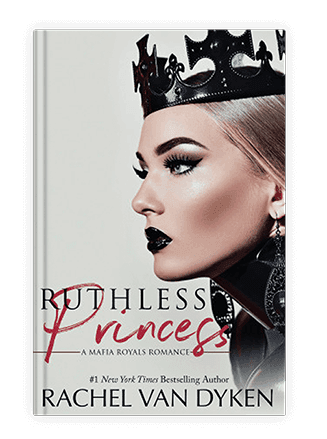
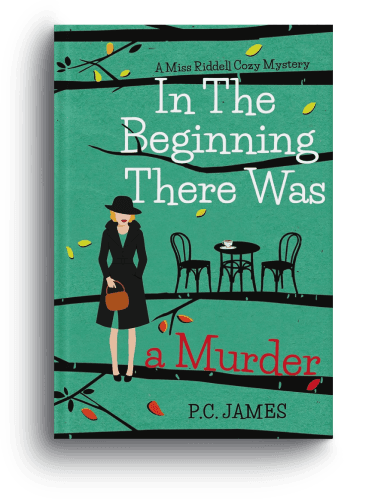
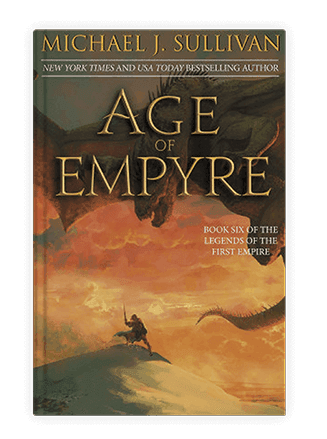
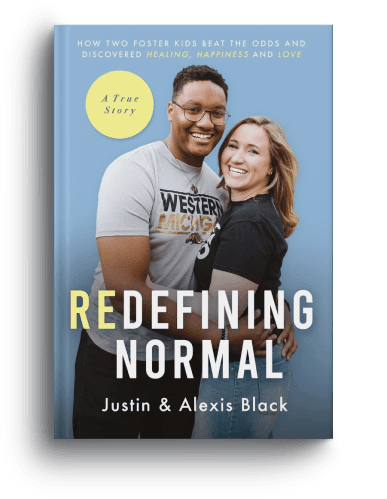
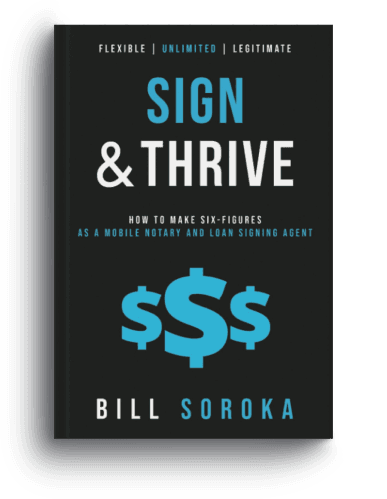
Our Work
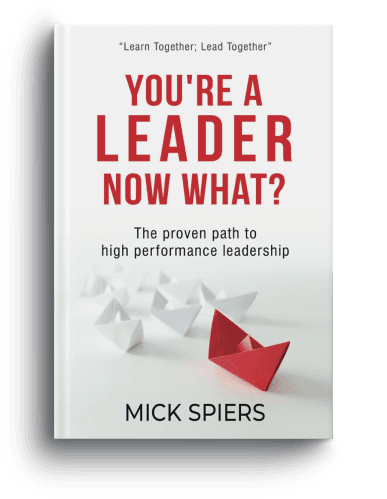
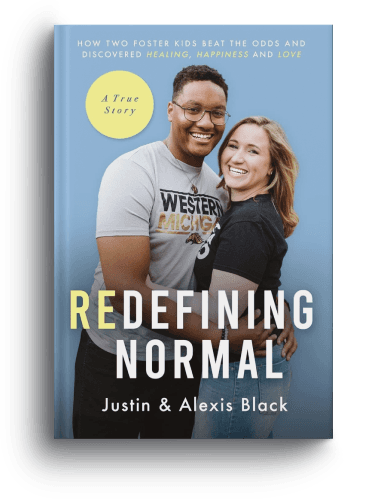
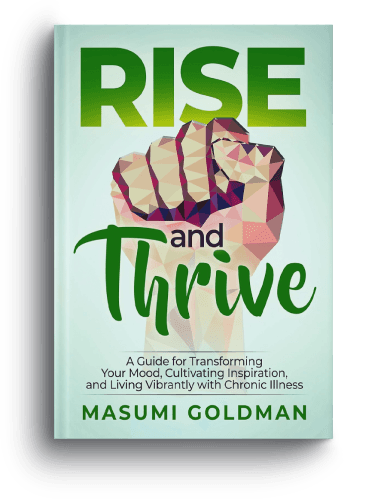
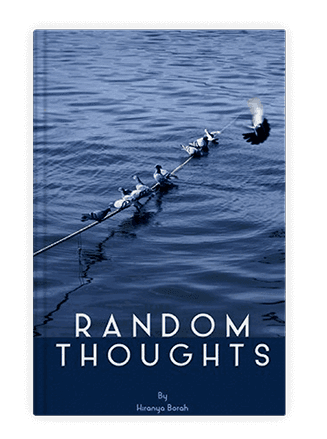
Behold Our Portfolio of Masterpieces
Every book we publish represents our uncompromising commitment to quality. Here are some of our best-selling titles.











Your Story Belongs
to Readers in Every Language.
Get a free translation consultation, we'll discuss your target market, assess your book's translation potential, and provide a transparent, per-word quote with a specific timeline before any commitment is required.
Free 500-word sample translation included · Native-speaking genre specialists · TEP standard throughout
Begin your translation project
Tell Us About
Your Book
Share your book's genre, word count, and target language, and we'll come back within one business day with a per-word quote, a sample translation offer, and an honest ROI assessment for your target market.
📞
Call us
+1 (929) 684 2021
✉️
Email us
hello@bookeunoia.com
🕐
Response time
Within 1 business day